Oh I could hide 'neath the wings of the bluebird as she sings
The six o'clock alarm would never ring
But it rings and I rise, wipe the sleep out of my eyes
My shaving razor's cold and it stings

Cheer up, sleepy Jean, oh what can it mean
To a daydream believer and a homecoming queen ?

You once thought of me as a white knight on his
steed
Now you know how happy I can be
Oh, and our good time starts and ends
With a dollar one to spend
But how much baby do we really need ?

Cheer up, sleepy Jean, oh what can it mean
To a daydream believer and a homecoming queen ?
Cheer up, sleepy Jean, oh what can it mean
To a daydream believer and a homecoming queen ?

Cheer up, sleepy Jean, oh what can it mean
To a daydream believer and a homecoming queen ?
Cheer up, sleepy Jean, oh what can it mean
To a daydream believer and a homecoming queen ?
Oh I could hide 'neath the wings of the bluebird as she sings
The six o'clock alarm would never ring
But it rings and I rise, wipe the sleep out of my eyes
My shaving razor's cold and it stings

Cheer up, sleepy Jean, oh what can it mean
To a daydream believer and a homecoming queen ?

You once thought of me as a white knight on his
steed
Now you know how happy I can be
Oh, and our good time starts and ends
With a dollar one to spend
But how much baby do we really need ?

Cheer up, sleepy Jean, oh what can it mean
To a daydream believer and a homecoming queen ?
Cheer up, sleepy Jean, oh what can it mean
To a daydream believer and a homecoming queen ?

Cheer up, sleepy Jean, oh what can it mean
To a daydream believer and a homecoming queen ?
Cheer up, sleepy Jean, oh what can it mean
To a daydream believer and a homecoming queen ?
A gravação original foi feita em dois dias distintos: 14 de junho e 9 de agosto de 1967, na RCA Victor Studios, em Hollywood, CA.
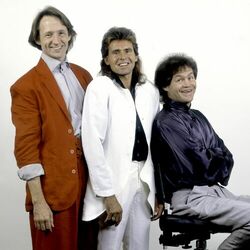
O vocal principal ficou a cargo de Davy Jones, enquanto Micky Dolenz contribuiu com os backing vocals.
A instrumentação incluiu guitarrista Michael Nesmith, pianista Peter Tork, baixista Chip Douglas, baterista Eddie Hoh e percussionista Bill Martin, além de cordas (Nathan Kaproff, George Kast, Alex Murray, Erno Neufeld) e trombones (Richard Noel, Richard Leith e Philip Teele).
O arranjo da música foi conduzido por Shorty Rogers, dando ao single um toque clássico e polido.
"Daydream Believer" alcançou o número um na Billboard Hot 100 por quatro semanas consecutivas em dezembro de 1967, tornando-se o último sucesso número um dos The Monkees nos Estados Unidos.
Encontre o álbum e produtos relacionados a esta música

CD
The Best of The Monkees
The Monkees
Vinil
The Best of The Monkees
The Monkees

Camiseta Branca
The Monkees
TopSongs Store

Camiseta Preta
The Monkees
TopSongs Store
© 2026 TopSongs. Todos os direitos reservados.
Fundado em 2012
